

Affiliate Disclosure: As an Amazon Associate, I earn from qualifying purchases because apparently keeping the house running isn’t free.
A Soft Home Reset uses simple smart-home technology to make your house feel calmer, safer, and easier to live in—without adding another pile of apps, automations, or things to manage. Most smart-home content seems determined to convince you that your house needs to become a NASA control room.
Sirens.
47 apps.
Automations with names like “Good Morning Executive Mode.”
Men on YouTube yelling about latency.
If that’s not your vibe, same.
The Soft Home Reset is a different approach.
It’s about using smart technology to make your home feel:
- calmer
- safer—quietly
- more comfortable
- less like it’s constantly asking you to do something
This isn’t about turning your house into a robot.
It’s about:
Make the house do a few things so you don’t have to.
And honestly? That’s about as complicated as I want my smart home to be.
What’s Inside the Soft Home Reset
- Quiet safety without constant checking
- Temperature that adjusts itself
- Better-feeling bedroom and living-space air
- Softer evening lighting
- A simple morning-to-night reset
- How to start without buying your entire smart-home aisle
Step 1: Quiet Safety — Leaks You Don’t Want to Meet
Nothing makes you appreciate automation quite like discovering a water leak when you’re already having a bad day.
A surprise puddle. A soggy cabinet. The phrase “water damage.” No thank you.
A water leak sensor is one of those smart-home upgrades that isn’t particularly exciting—and that’s exactly why I like it.
You install it, put the sensors where water has absolutely no business being, and let the system complain to you if something goes wrong.
YoLink Water Leak Starter Kit
Use sensors in places such as:
- under sinks
- near the water heater
- behind or near the washing machine
- other areas where a small leak could become a very expensive problem
The goal isn’t to check the app every morning.
The goal is to not think about it until there’s something worth knowing.
That’s the kind of smart-home automation I can get behind.
Step 2: Comfort on Autopilot — Stop Micromanaging the Thermostat
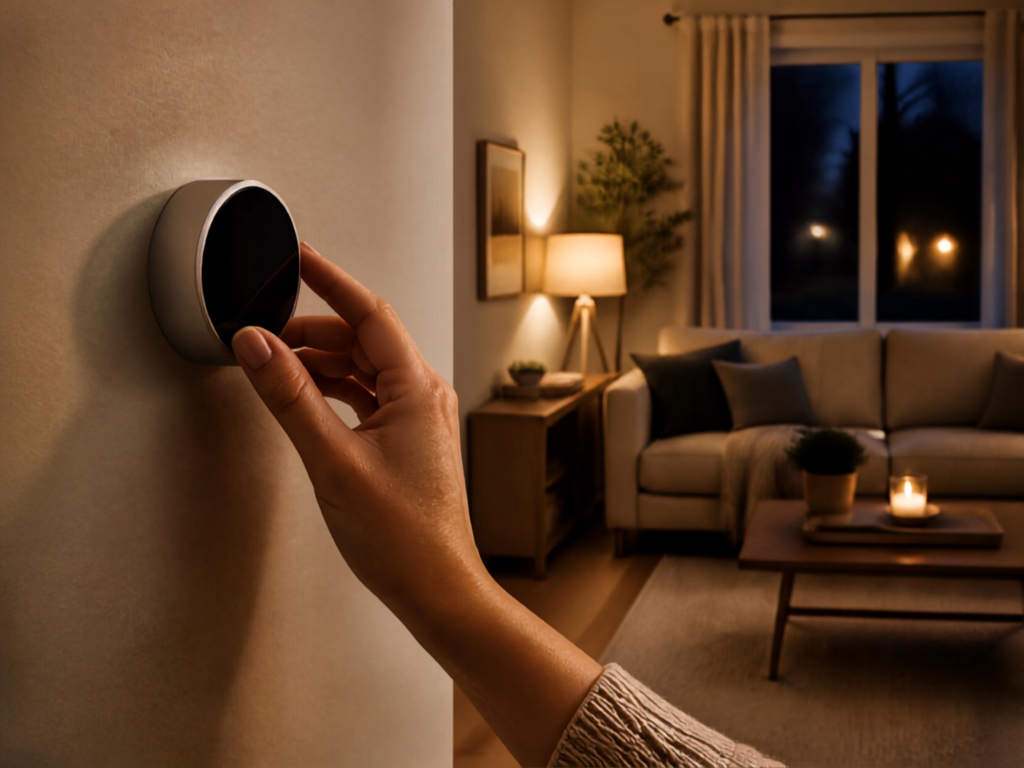
If you’re constantly:
- nudging the thermostat
- arguing with someone about “too hot” or “too cold”
- freezing in one room while sweating in another
- walking past the thermostat thinking, Didn’t I just change that?
Let the thermostat be the villain.
Option A: Google Nest Thermostat
A good option if you want straightforward scheduling and app control without turning temperature management into a hobby.
Option B: ecobee Smart Thermostat Premium + Sensors
The advantage here is room-level information and control.
With compatible room sensors, you can prioritize the spaces you’re actually using instead of letting the hallway dictate the temperature for everyone.
And that’s the point.
Set a few predictable transitions:
- Morning: comfortable wake-up temperature
- Day: efficient when you’re away
- Evening: comfortable where you’re actually living
- Night: your preferred sleeping temperature
Then stop touching it.
Your house should not depend on you remembering that the thermostat exists.
Step 3: Breathe Easier — Air That Doesn’t Feel Stale
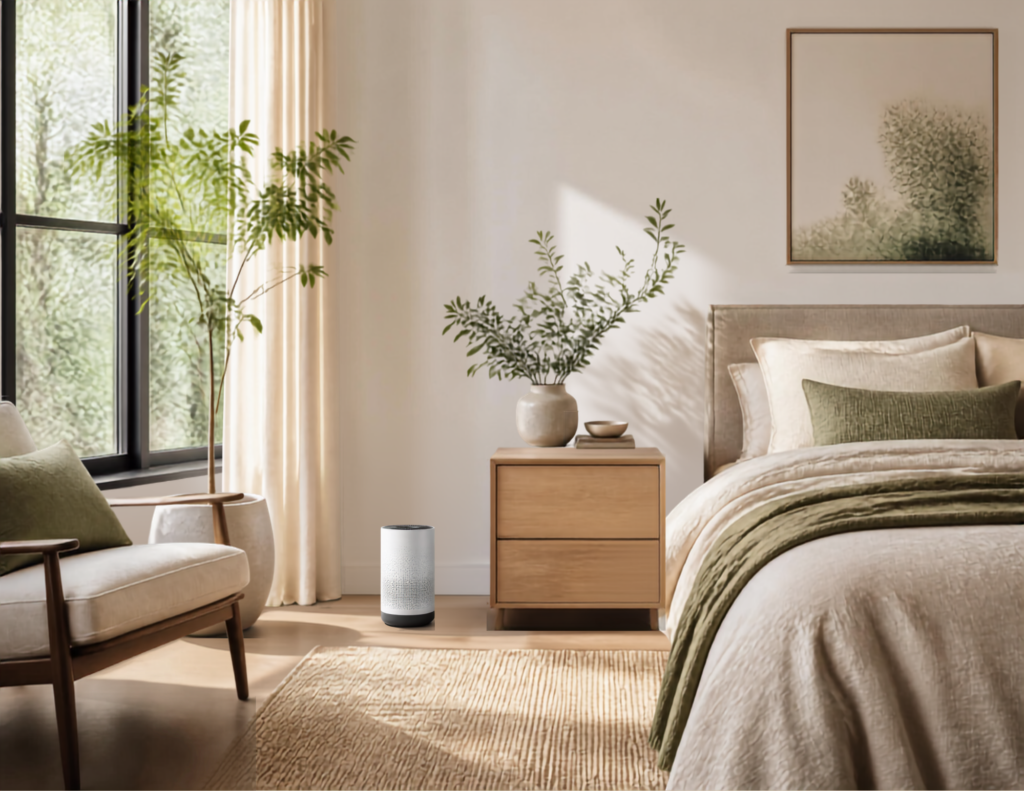
You know that feeling when a room is technically fine but somehow feels…
gross?
Stuffy.
Warm.
Heavy.
Dusty.
You haven’t done anything strenuous. You’re just sitting there wondering why the room feels like it needs a personality transplant.
The air in your home is part of the environment you’re living in, so it’s worth paying attention to.
SwtichBot Smart Air Purifier
A smart air purifier can be useful in larger living areas or rooms where dust, pet dander and everyday indoor pollutants are an issue.
The goal isn’t to obsess over air-quality numbers.
It’s to make the room feel better.
SwtichBot CO₂ Monitor
A CO₂ monitor gives you information about:
- CO₂ levels
- temperature
- humidity
It doesn’t magically fix your air.
It simply gives you another piece of information when a room starts feeling stale.
Sometimes the answer is:
Open a window.
Revolutionary technology, I know.
The simple approach
- Run the purifier when you need it.
- Check the room if it feels stuffy.
- Ventilate when appropriate.
- Don’t turn air quality into another thing you have to monitor constantly.
Information is useful. Obsessing over the dashboard is not.
Step 4: Soft Lighting That Doesn’t Attack You

Overhead lights at 10 p.m. are rude.
Lamps are polite.
Smart lamps are polite and on time.
This is one of my favorite smart-home upgrades because it changes the feeling of a room without requiring a complicated system.
Kasa Smart Plug + Philips Hue Smart Bulb
You can turn a regular lamp into part of your smart-home routine with:
- a smart plug
- a smart bulb
Then create a simple Soft Evening scene.
For example:
- bedside or living-room lamp on
- warm, low light
- overhead lights off
- thermostat moving toward evening comfort
- air purifier running quietly
The house starts shifting gears.
And hopefully your brain follows along.
Slightly less feral is the goal.
Your Soft Home Reset: From Morning to Night
The individual pieces are useful.
But the magic—if we’re going to call it magic—is when they work together without requiring you to manage them.
Morning
Your thermostat has already shifted from your sleep setting to a comfortable morning temperature.
A lamp can provide softer light instead of starting the day with the overhead equivalent of an interrogation room.
You wake up.
The house is already doing a few things.
Good.
Daytime
Your air purifier runs quietly as needed.
Your CO₂ monitor gives you information if a room starts feeling stale.
Your thermostat handles the schedule.
You don’t need to open three apps to admire your automation.
That’s the point.
Evening
This is where the Soft Home Reset really earns its name.
Your lighting shifts toward:
warm + low + calm
The thermostat moves toward your preferred evening temperature.
The air purifier can continue running quietly.
The overhead lights go off.
The house starts looking and feeling different.
Not dramatic.
Just softer.
Night
One simple scene or voice command can potentially:
- turn off the lamps
- shift the thermostat to your sleep setting
- leave the air purifier running where appropriate
And then you’re done.
This isn’t a “look at my insane automation graph” setup.
It’s:
My house does a few things so I can do less.
That’s the whole idea.
You Do Not Need All of This
This is important.
You don’t need to buy a thermostat, leak sensors, air purifier, CO₂ monitor, smart bulbs and smart plugs on Tuesday because you read one blog post.
Please don’t.
Start with the problem that’s actually annoying you.
If your house feels too harsh at night:
Start with lighting.
If you’re constantly adjusting temperature:
Start with the thermostat.
If your rooms feel stuffy:
Start with ventilation or an air purifier.
If you’re worried about leaks:
Start with leak sensors.
Then stop.
You can always build from there.
A smart home should solve problems. It shouldn’t become one.
How This Fits Into Your Smart Organized Living System
The Soft Home Reset isn’t meant to be a standalone gadget collection.
It’s part of a bigger idea:
Your environment should support the way you actually live.
For example:
- Smart Sleep Sanctuary focuses specifically on creating a calmer bedroom environment at night.
- Smart Comfort Reset goes deeper into temperature, air quality and home comfort.
- WFH Smart Home Setup takes the same philosophy into your daytime workspace.
The idea connecting all of them is simple:
Build the environment so it supports you instead of asking you to constantly manage it.
And that’s really what Smart Organized Living is about.
Not more technology.
Better systems.
One Last Thing: Don’t Confuse Automation With More Work
There’s a weird tendency in smart-home culture to assume that the more complicated your setup is, the smarter your home must be.
I’m not buying it.
If your “smart” system requires:
- six apps
- twelve automations
- three dashboards
- constant troubleshooting
- and a monthly reminder to check whether your automations are still working
…you have not eliminated work.
You’ve created a new hobby.
And I have enough hobbies.
The best automation is usually the boring kind.
It quietly happens.
You barely notice.
And that’s exactly why it works.
Final Thought
Your home doesn’t need to impress anyone.
It doesn’t need to be the smartest house on the block.
It needs to feel good to live in.
If a few small pieces of technology can make the lights softer, the temperature more comfortable, the air easier to manage and the scary stuff quieter in the background?
Perfect.
That’s a smart home I’d actually want.
Want More Practical Systems Like This?
If you like the idea of making your home work a little harder so you don’t have to, that’s exactly what I write about in The Reset.
It’s my Substack for practical systems, real-life routines, home organization and the occasional reminder that you probably don’t need to make everything harder than it needs to be.
No perfection.
No 47-step routines.
No pretending we all have unlimited time.
Just practical ideas for making everyday life feel a little more manageable.
Get The Reset →
Quick Product Links From This Routine
If you just want the product lineup, here it is—organized by what each piece actually does.
Quiet Safety & Prevention
Comfort & Air
- Google Nest Thermostat (Programmable, Energy Star)
- ecobee Smart Thermostat Premium with Smart Sensor & Air Quality Monitor
- ecobee Smart Sensor 2‑Pack
- SwitchBot Air Purifier for Large Rooms (up to 3620 ft², Matter Support)
- SwitchBot CO2 Detector